Illustrated Primer to Early Books(and Incunabula References)
- Bands or Cords
- The ligatures that held early books together. The cords were used in binding the pages to the book covers.


- Book Cover
- The boards that are connected to the spine of the book. Some early books had their covers elaborately decorated. [see gold tooling]


- Book Size
- The first books were usually printed in folio, quarto or octavo style. Originally the terms referred to the number of times that the sheet of paper was folded. A Folio was composed of a sheet of paper folded in half (i.e. folded once) (4 pages), A Quarto was a sheet of paper folded twice (8 pages), and Octavo was a sheet of paper folded three times (16 pages).


- Cadel
- Calligraphic decoration extension. The extra sweeping strokes added to letters.


- Capital Marks
- Marks, often in Red or Blue, which highlight the capital letters on the page

- Catchword
- A word at the Bottom of the page that anticipates the beginning word on the following page. It was used to help the printer keep the pages in the proper order.


- Colophon
- Information concerning the publication of the book. It usually follows the final words of the book (the explicit).


- Commentary (or Glosses)
- Scholarly comments about the text of a book. It was often written in smaller type than the original text.


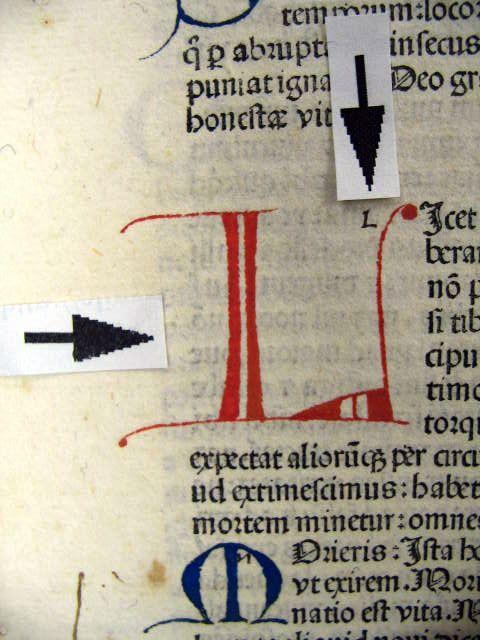
- Decorated Initial
- Single letters that were enlarged and decorated in early books. Although at first these were hand-drawn in blank spaces left for that purpose, later they were printed in the book.


- Diminuendo
- A decorative device that is used in making the change from the enlarged initial to the regular text. It is the gradual reduction in height of a few letters following the enlarged initial.


- Duodecimo
- Originally a sheet of paper folded four times, making 12 leaves or 24 pages. Now it is a book approximately 5” x 73/4 “
- End Papers
- Blank leaves at the start or end of a book, one sheet of which connects to the cover board. [See also Flyleaf].


- Explicit
- The final words of a book. The term is a shorthand for the final words at the end of medieval scrolls “Explicitus est Liber” (the book is unrolled).

- Flyleaf
- A blank leaf at the beginning or end of a book, not connected to the cover board. [See also End Papers].


- Foliation
- Numbering the leaves of a book.


- Folio
- Originally a sheet of paper folded in half (four pages). Now it refers to a large book that is around 12.5 inches or larger in height and 9 inches wide.

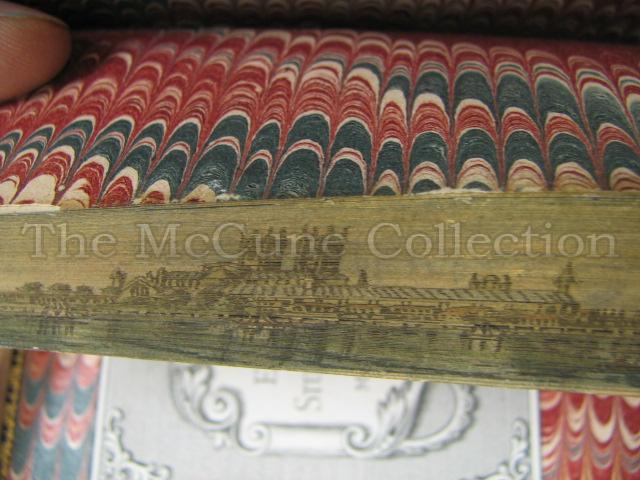
- Fore-edge Painting
- A scene painted on the edges of books so that the scene is visible when the pages are fanned.


- Foxing
- Age related spots and browning on paper in books.


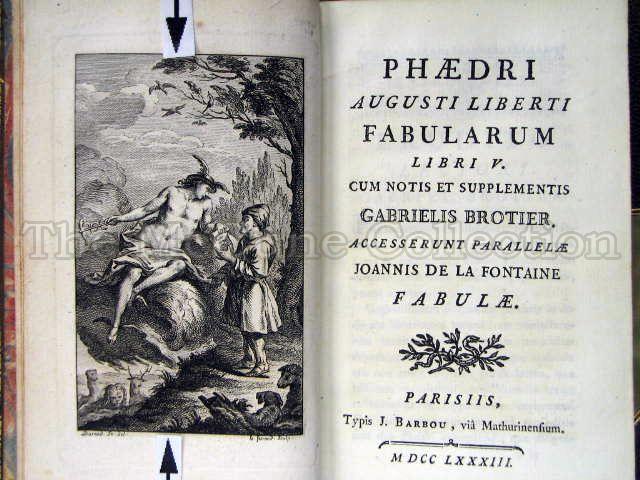
- Frontispiece
- Decorative illustration facing the title page of a book.


- Gold Tooling
- The use of gold leaf as ornamentation on the binding of a book.


- Gothic Type (also called blackletter script)
- Early form of type that imitated the handwritten script of medieval manuscripts. It was first used by Gutenberg in the printing of the Mainz bible.


- Greek Type
- As printers began to rediscover the Greek classics, they began to want to print these works in the Greek language and developed type to match the language.

- Guide Letter
- This was a small letter printed in a blank space on the page so that the illuminator would know what capital initial to highlight there.


- Gutenberg Bible (Mainz Bible)
- First book manufactured with movable type 1450-1455 in Mainz, Germany by Johann Gutenberg.


- Gutter
- the margins between two facing pages.

- Half Title
- A page containing only the title of the book.


- Headpiece
- Decoration at the beginning of a chapter.


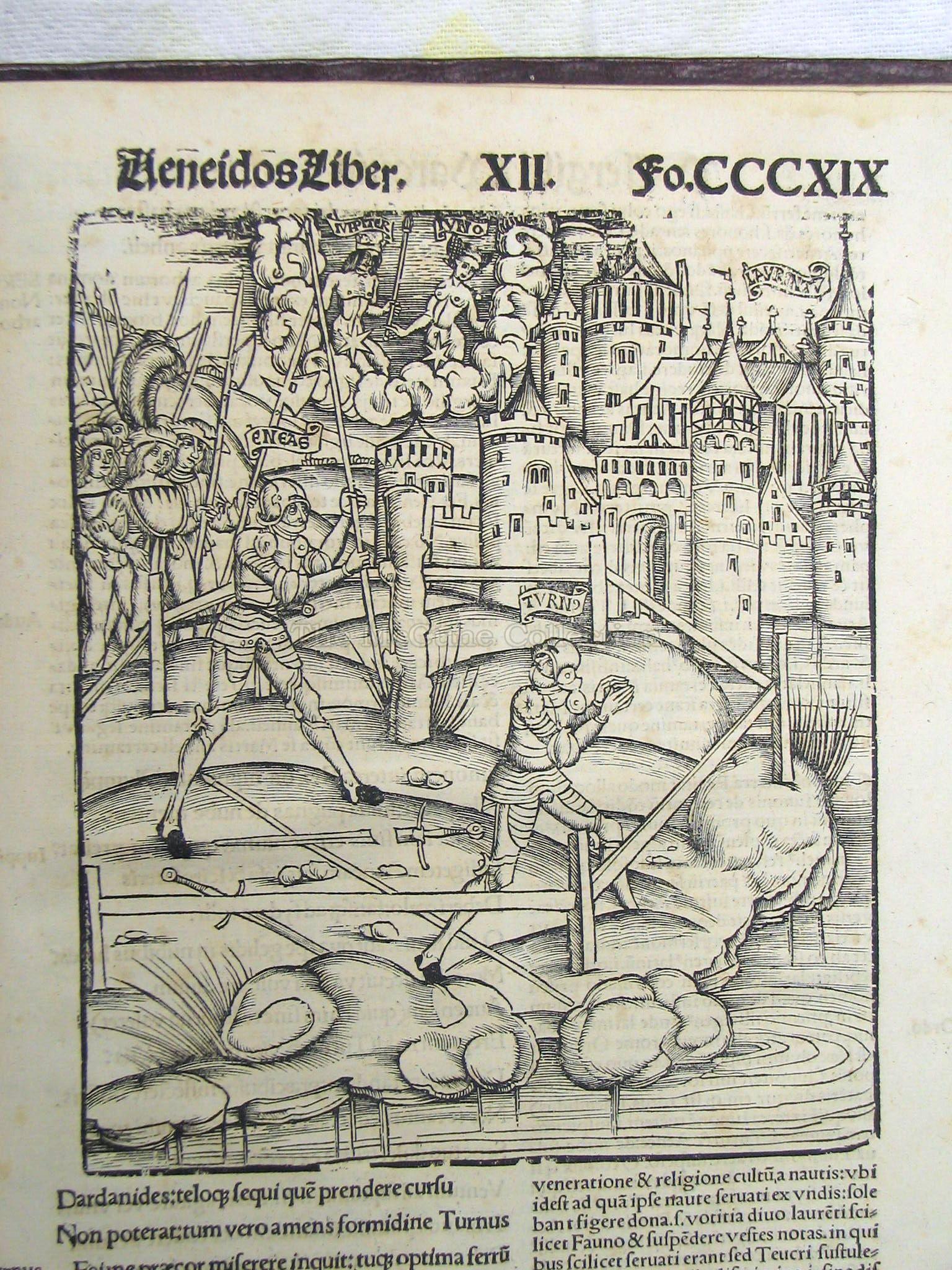
- Illustrated
- Decorated with pictures.
- Incipit
- The beginning of the text of the book. From the latin for “it begins.”


- Incunabula
- Books printed before the year 1501.


- Index
- Detailed list of specific information in a book, usually arranged in alphabetical order.


- Initials
- Single letters that were often enlarged and decorated in early books. The earliest printed books left the initials for an illuminator to draw in by hand.


- Italic Type
- Calligraphic typeface invented by Aldus Manutius in the 15th century. Italic type was narrower than the gothic type commonly in use and thus took up less space, allowing for more words per page.

- Leaf
- The front and back of a page.


- Limp Binding
- book cover composed of parchment or vellum without boards.

- Line Fillers
- Decorations that are used to finish out a line of type.


- Line Initial Height
- The height of an initial. A two line initial is the height of two lines of print; a five line initial is the height of five lines of print, etc.


- Litterae Notabiliores
- Letters that larger than the text but smaller than the initials, usually marking divisions of the text.
- Majuscule
- Upper case or capital letters.

- Marbled Paper
- Decorative swirling colors on papers that are used as endpapers, inside boards of a book and sometimes as the covers of a book. The effect is obtained by placing colors in a fluid and then transferring them to the paper.


- Marginalia
- Notes and drawings in the margins of a book.


- Mildew (Mold) Damage
- Mildew is a form of mold fungi that grows on books when they are damp. It often takes the form of a white powdery substance.


- Minuscule
- Lower case letters.


- Octavo
- Originally a sheet of paper folded three times, thus making 16 pages. Now it refers to books between 5”w x 8”l to 6”w to 9” l


- Paragraph Marks
- Colored Marks, often red or blue, that indicate paragraphs. Often used with in conjunction with capital marks.

- Pastedown
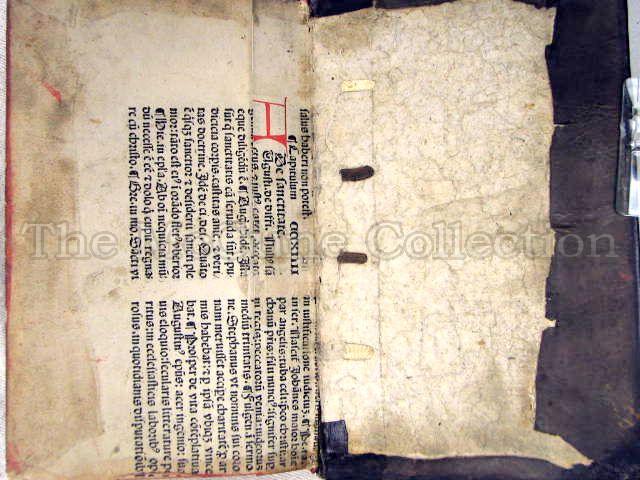
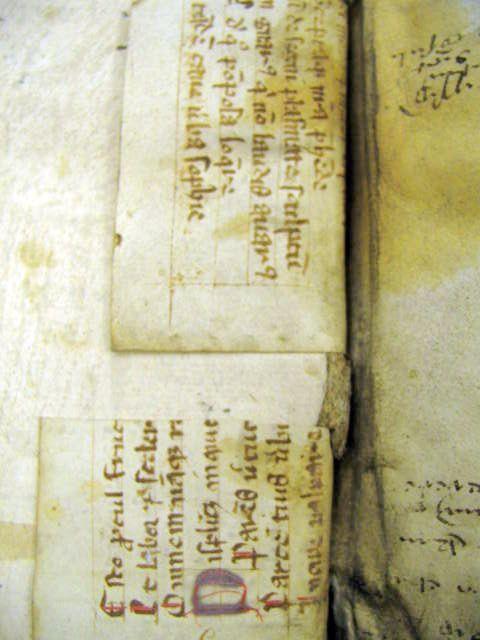
- A leaf (often fragments of earlier manuscripts) pasted onto the inside of book and the binding.


- Pen Flourished Initial
- Initial decorated with abstract linear embellishments, often in red or blue


- Printer’s Device or Printer’s Mark
- A trade mark that distinguished a particular printer’s publications.


- Quarto
- Originally a sheet of paper folded twice (making eight pages). Now it refers to books that are11 to 12 inches in height.

- Quire
- Small groups or sections of folded pages that compose the book.

- Quire Signatures
- Numbers and/or letters printed on the quires to aid in properly arranging the leaves of the book.


- Raised Bands
- Ridged Area on the spine of a book where the cords are passed through holding the pages together.


- Recto
- Front side of a leaf or right side of a page.


- Roman Numerals
- The numbers used by the Early Romans. I=1, V=5, X=10, L=50, C=100, D=500, M=1000. These were often used to show the year of publication.


- Roman Type
- A form of type that was developed from the inscriptions on Roman capitals.


- Running Title
- Text at the top of the page indicating the title or subsections of the book.


- Sextodecimo
- Originally a sheet of paper folded five times until it had 16 leaves or 32 pages. Now a book approximately 4” x 6”.

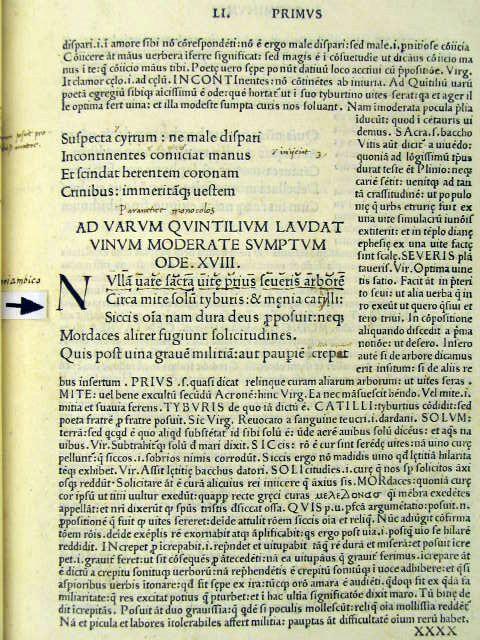
- Shoulder Notes
- Printed notes often placed in the margins of the book.


- Space
- Blank area left for the illuminator to add the initial. Sometimes guide letters would be left in the space to inform the illuminator of the letter to be drawn and colored.


- Spine
- Edge of the book where the pages are joined together with the binding. The Title is often placed on the spine of the book.


- Table of Contents
-


- Tailpiece
- Decoration at the end of a chapter.


- Text Layout
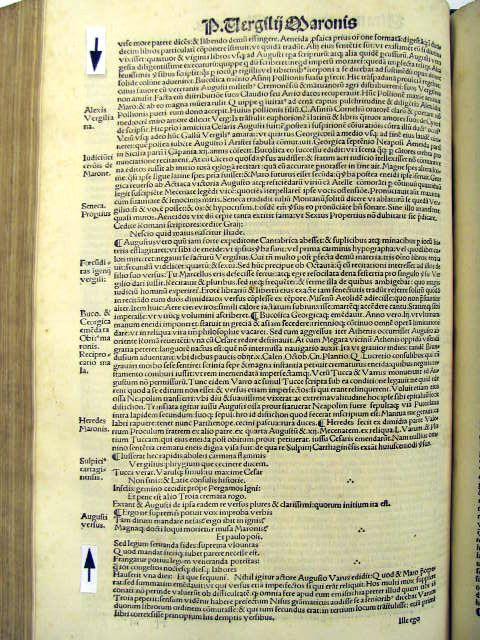
- Early books were laid out in various styles. Some had the text in one continuous column. Others had a two or three column layout. Books with glosses (or commentary) were often laid-out with the original text in the middle in larger type and the gloss (or commentary) in smaller type on the left and right.


- Title Page
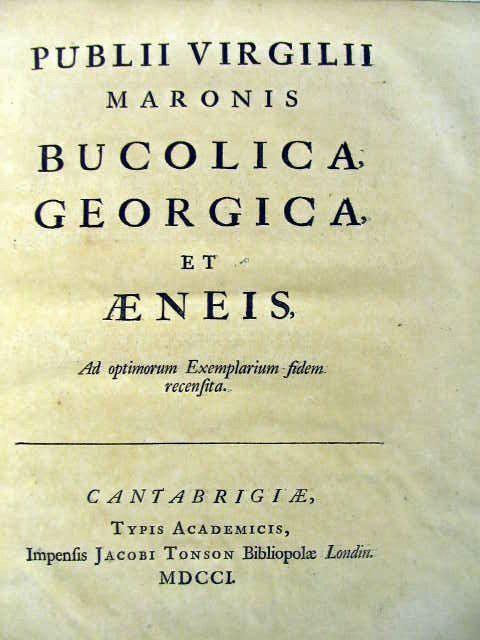
- Page that states the title, subtitle, author and often other information.


- Verso
- Back side of a leaf or left side of a page.


- Water Stains
- The stains that remain when water dries on pages of a book.


- Watermark
- A design or monogram left as an image in the blank paper at the time of production.
- Wormholes
- Hole made by the larvae of beetles in often found in old books.


- Xylograph
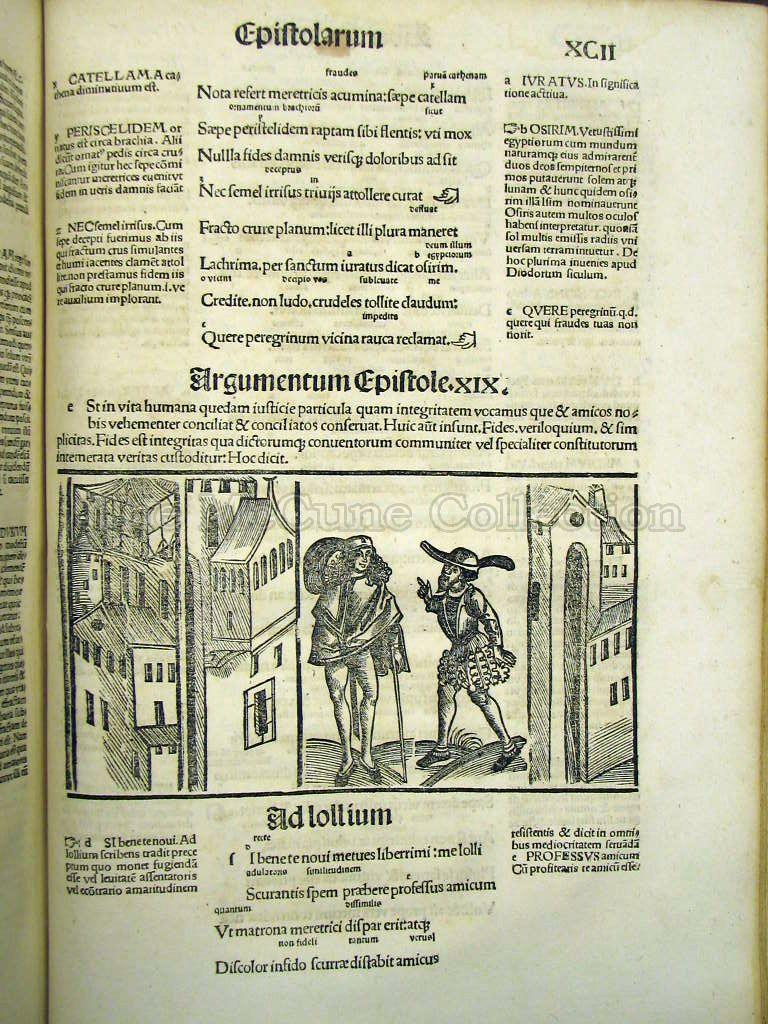
- Image or text printed from a woodblock.


























Incunabula References
- Bohatta, Hans
- Bibliographie des Livres d'Heures des XV & XVI Jahrhunderts (1924)
- British Library
- Incunabula Short Title Catalogue (ISTC) at the British Library
- British Library
- The Catalogue of Books Printed in the XVth Century Now in the British Museum (1908). [BMC].
- Brunet, J.C.
- Manuel du libraire et de l'amateur de livres . (1860-1864)
- Copinger, Walter Arthur.
- Supplement to Hain's Repertorium bibliographicum. (1926)
- Gesamtkatalog der Wiegendrucke (GW) at the Staatsbibliothek zu Berlin.
- Goff, Frederick Richmond
- Incunabula in American Libraries; a Third Census of Fifteenth-Century Books Recorded in North American Collections (1964)
- Goff, Frederick Richmond
- Incunabula in American Libraries: A Supplement to the Third Census of Fifteenth-Century Books Recorded in North American Collections (1972)
- Graesse, G. T.
- Tresor des Livres rares et precieux (1861-1869)
- Hain, Ludwig
- Repertorium Bibliographicum . (1826-1838)
- Hain, Ludwig & Burger, Conradi
- Repertorium Bibliographicum: In Quo Libri Omnes Ab Arte Typographica Inventa Usque Ad Annum (1891)
- Panzer, G. W.
- Annales Typographici ab artis inventae origine ad annum MDXXXVI (1793-1803)
- Polain, M.-Louis
- Catalogue des livres imprimes au quinzieme siecle des bibliotheques de Belgique: manuscript and photographic negatives, 1920-1933.
- Pollard, Alfred William
- A short-title catalogue of books printed in England, Scotland and Ireland, and of English books printed abroad, 1475-1640. (various editions between 1926 and 1991).
- Proctor, Robert
- Index to the Early Printed Books in the British Museum: From the Invention of Printing to the Year MD., with Notes of Those in the Bodleian Library. (1898).
- Reichling, Dietrich.
- Appendices ad Hainii-Copingerii Repertorium Bibliographicum. Additiones et emendations. (1905-1914).
- Stillwell, Margaret Bingham
- Incunabula and Americana, 1450-1800: A Key to Bibliographical Study (2nd Ed. 1961)
- Stillwell, Margaret Bingham
- Incunabula in American Libraries. A Second Census of Fifteenth-Century Books Owned in the United States, Mexico, and Canada; New York (1940)
- Stillwell, Margaret Bingham
- Beginning of the World of Books, 1450 to 1470: A Chronological Survey of the Texts Chosen for Printing During the First Twenty Years of the Printing Art, With Synopsis of the Gutenberg Documents. (1972)
- Winship, George Parker
- Census of Fifteenth Century Books Owned in America (1919)
Copyright © The McCune Foundation. Text and photos by Kenneth Innes III. Site design by Ken F. Innes IV.
Contact us at mccunecollection@gmail.com or (707) 674-4082 (Phone is not for general library information).
Site last updated Sunday, April 26, 2026 11:34pm PST